Management

What do we want our work to look like? Do we have aspirations about it that we share with our colleagues? What would we need to do or what would need to happen to make it happen? Do we know these answers, maybe we are walking this path, or is our work a kind of “dead run”? What is most important to us in our work, or what has the greatest impact on our satisfaction and performance? Is this properly valued and rewarded, including through the reward system?

A manager is the “head” of a company or public institution, which means acting in a rational, analytical and structured way. It is the role that, through the creation of “rules of the game”, should enable other roles to deal as smoothly, motivatedly, efficiently and effectively as possible with the multitude of different challenges and situations that work brings.
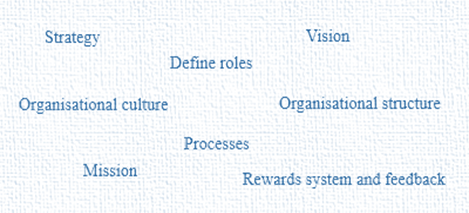
Being a manager is a professional role and cannot be given as a reward to someone who does not have the necessary education and training to perform it. It requires a very good understanding of what a company or some other type of organisation is. This is the only way to see the whole, to be able to identify different parts of the organisation and to recognise their role or their necessary contribution to the overall success.
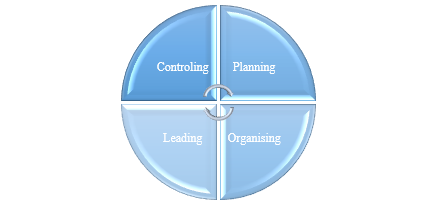
The management process consists of four steps. Planning is the process of defining the content of the work: what our objectives are and the steps we will take to achieve them. Organising is determining the format: which roles we need and how they will work together. Leading is implementing: through working with people, we put the plan and the designed organisation into action. Control is setting up rewards, feedback channels and all the systems that help with keeping performance on track.
Leadership

Leadership is working with people. To be successful, we first need content: to know what we want to achieve and how we can get there. Then we need the content in the right form: what skills, how many people, and how they can best work together. Next comes leadership: to make what we have in mind a reality. Making it happen brings doubts, uncertainties, new and previously unseen challenges – it raises many questions. It is leader’s responsibility to find the right answers to these questions, so that all members of the organisation can work as smoothly and successfully as possible.

What contribution do we want to make, why does our organisation exist? Whatever the diversity of skills, knowledge and perspectives in an organisation, it is always necessary that members are united by a common purpose. Even if they are different ideas about the way forward, we can embrace them when we know that they will ultimately build that same value.

Once you’re off, you have to keep rowing in the same direction. So once the work starts, it is necessary for all roles in the organisation to think in harmony and build a common outcome. A good understanding of the shared vision enables us to deliver exactly what one department needs from another.

What do you know about it? What is your experience, your opinion? How would you do it? Questions like these are essential content in leader’s vocabulary if we want to engage members of the organisation, encourage them to think and activate, and realise their potential.

The second mandatory set of questions in the vocabulary: How is the work going? Do you need anything? Is there anything that bothers you at work and how could it be solved? Motivation is a great asset: it means the presence of the desire of the members of the organisation to solve problems and raise performance to a higher level. Leader should make it possible to work smoothly and to maintain or even build on this motivation.
Followership

Pursuing a common mission and vision. It is not so much about following the leader as working towards building a common desired outcome. The term covers performing of tasks, achieving of set objectives, a realisation of an envisioned way of working and a creation of real results and progress. Each follower performs his or her role and contributes to an overall story. In doing so, they should be empowered; they should have power to decide and choose how to fulfil the purpose and objectives of respective role. To enable this, each follower must be aware of an identity that the organisation has, starting with essentials in mission, vision and strategy.

Followers follow the mission and vision, solve problems and create results. Management plans content of work and creates conditions for work. Leader is a link between the two. In this context, there are not super- or sub-roles, but inherently different roles, each with its own contribution to create, and together they form a functioning team.

Two of the qualities of a good follower highlighted are critical thinking and active involvement. Followers need to take ownership of their own work, take responsibility and think with their own head. At the same time, they are part of the organisation and should therefore actively work towards common goals set.
Being a follower or an employee of an organisation does not mean that leadership topics are not “our business”. If our desired image is one of partnership at work, of being able to make our own decisions, of having our ideas taken into account, then a prerequisite for this is our knowledge of the identity of the organisation or a part of the organisation in which we work.
 Paradim