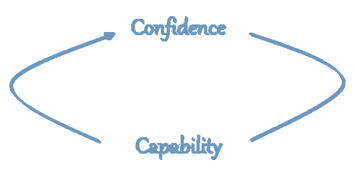
On the one hand there is a thought about how good I think (or believe) I am. On the other, there is one telling how good I really am. It turns out that we very often confuse or even equate the two. When a person comes across as confident and sure of himself or herself, that person also convinces us that he or she is good (in a given field). We need good leaders versus those who think they are good. But can we distinguish between confidence and competence?
Traditionally, it seems that people who are dominant are perceived as talented (and competent) to lead. So those who make their opinions clear and stick to them. Unfortunately, such leaders will often override opinions of others, who will remain unheard or even unspoken. A situation this creates is a great loss and makes such a “dominant individual” unsuitable for the role of (real) leadership.
Tomas Chamorro-Premuzic is an Argentinian researcher in organisational psychology. Watch this likeable and entertaining video in which he presents in a humorous way some of the findings of his research that can help us to identify good leaders and to appreciate the individuals and their qualities that build better relationships and better work environments.
 Paradim